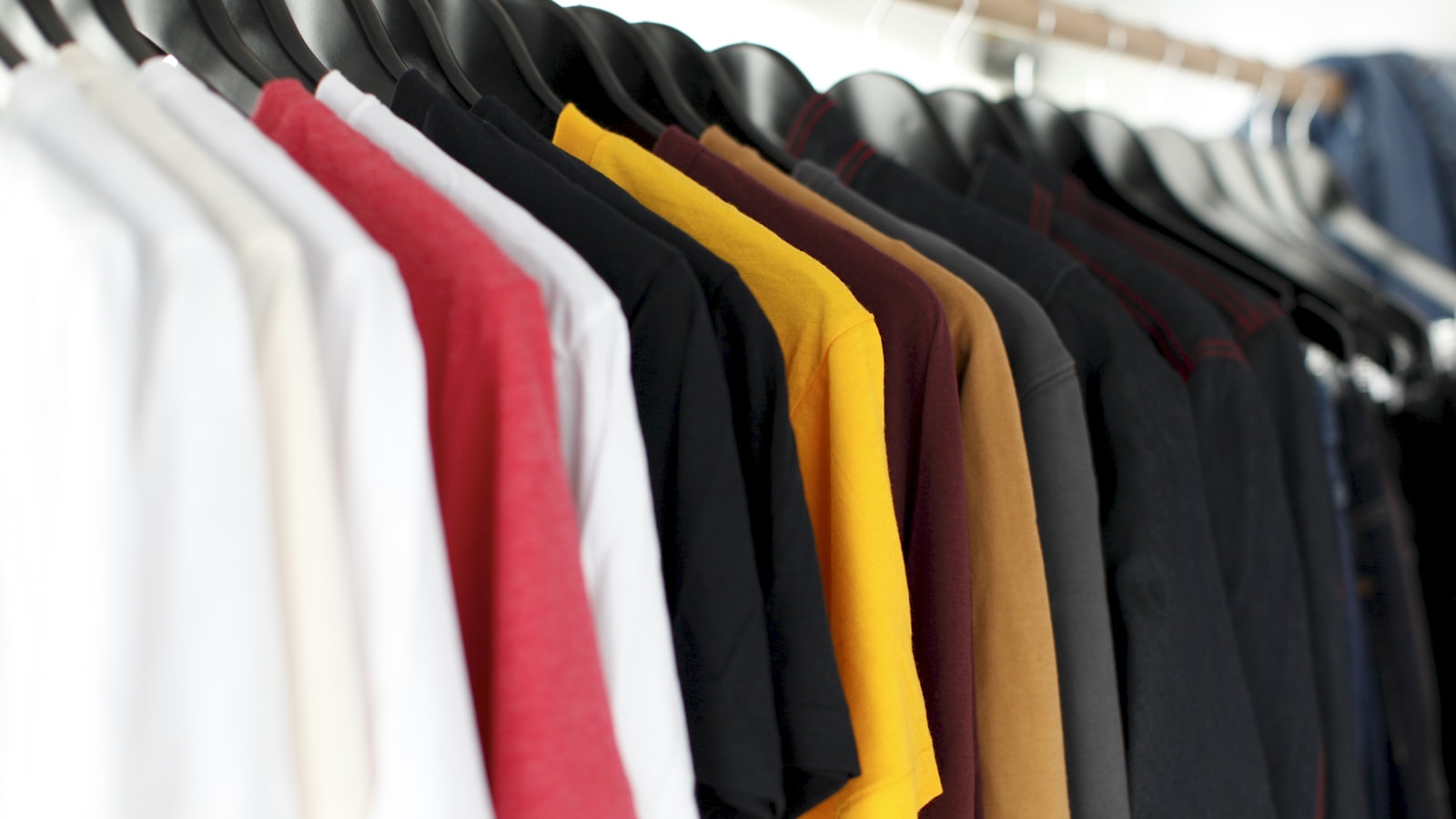
A well-made shirt and a poorly made one can hang side by side on the same rail, at nearly the same price, looking almost identical under the shop lights. The difference shows up later. After a few washes, one keeps its shape while the other sags, pills, or splits at a seam. Learning to tell them apart before you pay is one of the most useful skills a shopper can build.
You don't need a background in tailoring to do it. Quality leaves clues you can see and feel in about a minute, once you know where to look. Here is how to read a garment while it's still on the hanger.
Start with the fabric#
The cloth is the foundation, so begin there. Rub a corner between your fingers and pay attention to the weight. Cheap garments often use thin, papery cloth to save money, and thin fabric wears through, wrinkles badly, and loses its shape fast. Good fabric usually has a bit of substance and body to it, even in lightweight summer pieces.
Hold the garment up to a light or a window. If you can see straight through a shirt or a pair of trousers that aren't meant to be sheer, the weave is loose and the fabric is weak. A dense, tight weave blocks more light and tends to last far longer. Give the cloth a gentle stretch and let it go. It should spring back to shape rather than staying puckered or baggy.
Check the fibre content on the label too. Natural fibres like cotton, wool, linen, and silk breathe well and age gracefully, though they may need more care. Synthetics like polyester and nylon are durable and cheap but can trap heat and pill over time. Blends try to split the difference. There's no single right answer, but knowing what you're buying helps you predict how a piece will behave.
Check the seams and stitching#
Turn the garment inside out. This is where manufacturers cut corners when they think no one is looking, and it's the fastest way to judge how much care went into construction.
Look for stitches that are small, even, and straight, running in a tidy line without skips or puckering. Loose threads hanging everywhere are a sign of a rushed job. Give a seam a gentle tug and watch whether it holds firm or shows gaps between the stitches. Well-made clothes often have a generous seam allowance, meaning extra fabric inside the seam, which makes the garment sturdier and easier to alter later.
The best-made shirts and trousers use finished seams, where the raw edges are enclosed rather than left frayed. Serged edges, where thread wraps neatly around the raw fabric, are common and perfectly fine. French seams, which hide the raw edge entirely inside a fold, are a mark of real quality.
Inside-out is where the truth lives. A garment can look flawless from the front and fall apart from the seams. If a brand takes care with the parts you can't see, it usually took care with the parts you can.
Look at the finishing details#
Small details reveal a maker's standards. Buttons should be sewn on securely, ideally with a shank of thread underneath so they sit properly, and it's a good sign when spare buttons come attached inside the garment. Buttonholes should be tightly stitched and cleanly cut, with no fraying at the edges.
Zippers deserve a test. Run one up and down a few times. It should glide without catching, and a metal zip generally outlasts a flimsy plastic one. On patterned fabrics like stripes, checks, or plaids, look at where the pieces meet at the seams and pockets. When the pattern lines up across a seam, someone paid attention and used more fabric to do it. Mismatched patterns mean the maker prioritised saving cloth over looking right.
Check the hems as well. They should be even all the way around, with enough folded fabric to let the garment be lengthened or taken up if needed. On jackets and coats, a proper lining that lies flat and moves with the fabric is a strong sign of quality.
Try it on and test the structure#
Fit is part of quality, because the best-made garment in the world is useless if it doesn't sit right on you. Put it on and move. Raise your arms, sit down, reach forward. The shoulders on a jacket or shirt should line up with your own shoulders, since that's the hardest area to alter and the first place a cheap cut betrays itself.
Watch how the fabric drapes. Good cloth falls cleanly and follows the body without clinging awkwardly or standing away in stiff folds. On anything stretchy, pull gently and check that it recovers its shape instead of staying stretched out, because poor stretch recovery is why leggings and fitted tees go baggy at the knees and elbows.
Here's a quick order of checks you can run in under two minutes:
- Feel the fabric weight and hold it to the light
- Turn it inside out and inspect the seams
- Test buttons, buttonholes, and the zip
- Check pattern matching at the seams
- Try it on and move in it
Know which corners are worth cutting#
Not every purchase needs to pass every test. A quality-first approach makes the most sense for the pieces you'll wear constantly and keep for years, like a good coat, well-fitting trousers, boots, or a wardrobe staple you reach for weekly. For a one-season trend piece you suspect you'll be bored of by autumn, paying for museum-grade construction rarely makes sense.
This is where it helps to think about long-term value rather than the sticker price alone. A jacket that costs more but survives a decade of regular wear can work out cheaper per outing than three cheap ones that fall apart. If you want a simple way to run that maths in your head, it's worth learning how to use cost per wear to shop smarter so you know when to spend and when to save.
Quality-spotting also pays off away from the high street. The same skills work beautifully in a charity shop or vintage store, where the mix of eras and makers means real gems sit next to junk. If you enjoy the hunt, these habits translate directly into knowing how to shop for clothes secondhand without getting stung.
Buy with your hands, not just your eyes#
The whole approach comes down to slowing down for sixty seconds before you commit. Screens and shop displays are designed to sell you on how a garment looks. Quality lives in how it's made, and that only reveals itself when you feel the cloth, turn it inside out, and move around in it.
None of this requires expertise, just the habit of checking. Do it a few times and it becomes automatic. You'll start noticing the difference between a piece that will still look good next year and one that's already halfway to the donation bag, and your wardrobe, and your budget, will thank you for it.