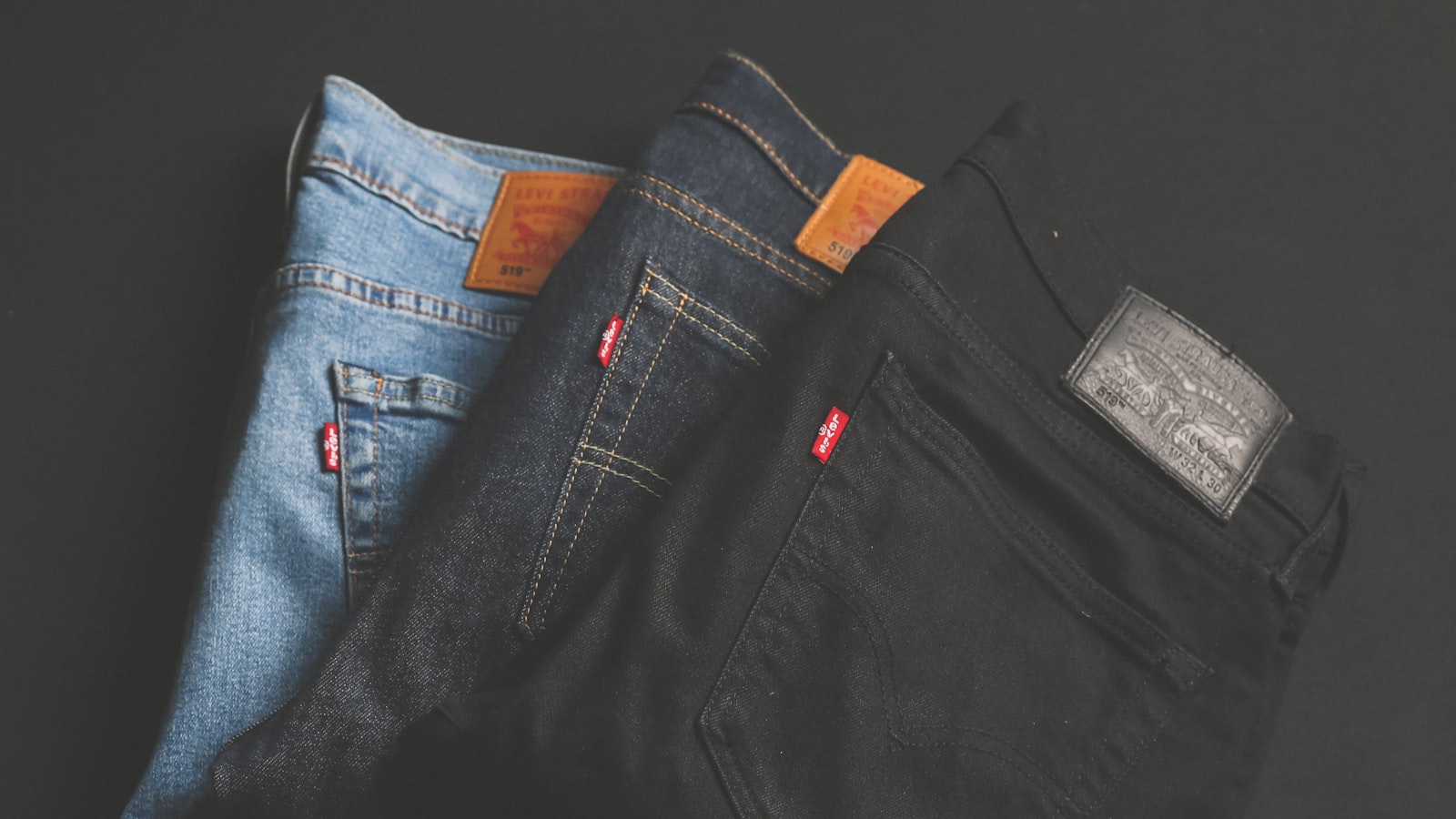
Jeans are the piece most people wear most and fit worst. Almost everyone has a pair that pinches when they sit, gapes at the back, or drags on the floor — and a lot of us just accept it, as if denim discomfort were a law of nature. It isn't. Jeans that fit well are out there; the trouble is that finding them takes a little more than grabbing your "usual size."
The good news is that fit follows a few understandable rules. Once you know what rise, cut, and stretch actually do, you can walk into a fitting room with a plan instead of a pile of guesses. Here's how to find a pair you'll genuinely want to wear.
Ignore the number on the label#
Denim sizing is famously unreliable. A 32 in one brand can feel like a 30 in another and a 34 somewhere else, and vanity sizing muddies the water further. If you shop by the number alone, you'll spend a lot of time frustrated. Treat the size on the tag as a rough starting point and let the mirror and how it feels make the final call.
This matters even more if your body has changed, and everyone's does. Weight shifts, muscle, age, and even the time of day all move where you land. Chasing a number you wore a few years ago is a recipe for jeans that don't fit today. Buy for the body you have now, and let the label be whatever it is — no one else can read it, and it says nothing about you.
One habit helps a lot: try the same style in the size above and the size below whatever you'd normally grab. It takes an extra minute, and it's the fastest way to feel where you truly land, since the gap between a pair that pinches and one that fits is often a single size you'd never have reached for on faith.
Always try on before you commit, or buy from somewhere with easy returns so you can try at home. Denim is one of the worst things to buy on a size guess.
Understand rise and cut#
Two things shape a pair of jeans more than anything else: the rise and the leg cut. Get these right for your body and the fit falls into place; get them wrong and no size will save you.
The rise is how high the waistband sits. A low rise sits below the belly, a mid rise around it, and a high rise at or above the natural waist. Rise decides comfort when you sit down and how the waistband behaves when you bend, so it's worth trying a couple of rises to feel the difference on you. Many people who "hate" jeans just hate one rise and have never tried another.
The cut is the shape of the leg — skinny, straight, tapered, relaxed, wide, and everything between. Cut is largely taste, but it also interacts with your proportions and the shoes you'll wear. A useful move is to keep the fit clean where it counts and let the cut express the rest:
- Straight and tapered cuts flatter a wide range of bodies and shoes
- Relaxed and wide cuts read easy and comfortable, and hide stiff denim's flaws
- Skinny cuts need more stretch to stay comfortable through the day
- Whatever the cut, the waistband should stay put without a belt clinging on for life
Stretch is the third lever, and it's easy to overlook. Pure rigid denim looks great and ages beautifully, but it has no give, so the fit has to be right from day one. A little elastane makes jeans more forgiving through the day and easier to move in, at the cost of some longevity. Neither is better — it's a trade-off, and knowing which you're buying saves the surprise of jeans that either never soften or stretch out by lunchtime.
The best cut is the one you forget you're wearing by lunchtime. If a pair looks great standing at the mirror but you're already adjusting it, it's not the pair.
Test the fit properly#
Most people judge jeans standing still, facing forward, holding their breath a little. That's exactly the wrong test, because you don't live standing still. The real fit test happens when you move.
In the fitting room, sit down fully and see whether the waistband digs in or the thighs go tight. Squat as if picking something up. Walk a few steps. Reach down. If the jeans pinch, roll at the waist, or slide down, that's your answer regardless of how they looked a moment ago. Comfort in motion is the whole game, since motion is what your day is made of.
Check a few specific spots while you're at it. The waistband should hug without cutting in or gaping at the back. The seat should be smooth, not pulling or sagging. The thighs should have room to sit without straining the seams. And the length should work with the shoes you'll actually wear — too long and it puddles, too short and it looks accidental. Knowing your body honestly helps here, and if that's something you wrestle with, how to dress for your body with confidence is a gentler way in.
Tailoring turns near-misses into keepers#
Here's the thing most people don't realize: you're allowed to alter jeans. A pair that fits everywhere except one spot is a tailoring job, not a write-off, and denim alterations are usually cheap.
The most common and worthwhile fixes are a simple hem to get the length right, taking in a waistband that gapes at the back, and slimming a leg that's wider than you want. None of these cost much, and any of them can turn a "pretty good" pair into the pair you reach for first. If you find jeans that nail the seat and thigh but miss on length or waist, buy them and get them adjusted — those are the easy fixes.
Keep the fabric in mind when tailoring, too. Rigid denim holds an alteration cleanly, while a very stretchy pair can fight a taken-in seam and pucker. For most simple hems and small waist tweaks it makes no real difference, but it's worth a quick word with whoever does the work if you're changing more than the length.
Once you find a make and size that truly works, remember it. Jeans that fit are hard enough to find that repeating a winner is smart, not boring, and a great-fitting pair earns its place among the wardrobe basics worth owning. Note the brand, the cut name, and the size, so next time you're not starting from zero.
Finding jeans that fit is mostly patience plus a few rules: skip the label number, learn your rise and cut, test them moving, and tailor the near-misses. Put in that effort once and you're rewarded every single day you get dressed — which, for the piece you wear most, is a very good trade.