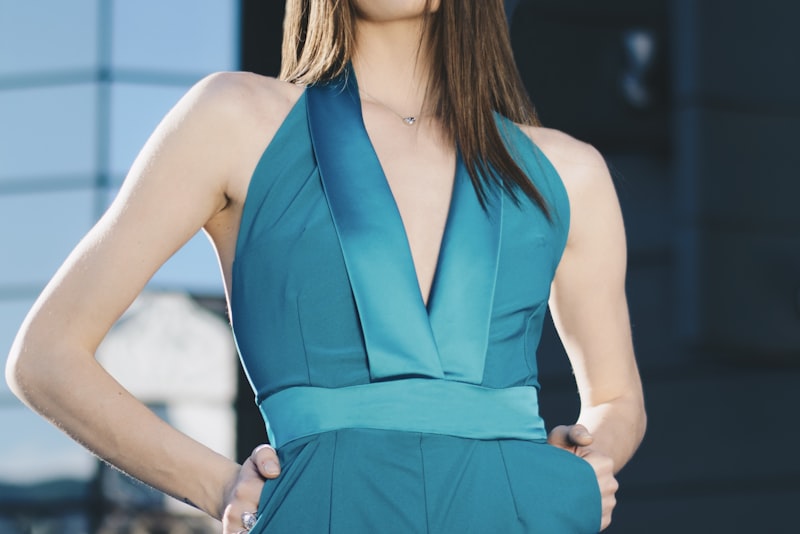
Getting dressed shouldn't feel like a standoff with a full closet. Most days you don't need anything new — you need a dependable way to turn what you already own into an outfit that feels like you. The clothes are already hanging there. The method is the part that usually goes missing.
Building an outfit is less about a flash of inspiration and more about a short run of decisions made in roughly the same order each time. Once that order becomes a habit, mornings speed up and the results get steadier. You stop staring at the rail and start choosing from it.
Start with one anchor piece#
Pick the one item you genuinely want to wear today, and build outward from it. It might be a shirt you feel good in, a pair of trousers that fit exactly right, a dress, or a favorite sweater — the piece itself matters less than the fact that you've made a single, low-stakes decision to begin. Everything else now has a job: to support that piece rather than compete with it.
Choosing an anchor works because it shrinks the problem. Instead of weighing every garment you own against every other one, you're only asking, "What goes with this?" That's a far smaller question, and a far easier one to answer before coffee. If nothing jumps out, default to the piece you reach for most — the thing that already earns its place in your week. Your instincts about what feels good are usually right, so trust the item that keeps calling to you.
There's a quiet confidence that comes from starting with something you like rather than something you think you should wear. An outfit built around a piece that fits your real body and your real day tends to look more natural than one assembled to impress. Comfort and ease read as style far more often than people expect.
Pair it with something that agrees#
With an anchor chosen, add a second piece that works with it in one clear way. Usually that means either color or formality. A relaxed anchor wants relaxed company; a sharper piece wants something equally considered. You're not matching everything perfectly — you're avoiding a clash that would make the whole thing feel accidental.
This is where a little color sense saves time. You don't need a theory to get it right, just a habit of leaning on shades that already sit well together. If you want the reasoning behind it, how to mix colors in an outfit breaks down a few plain rules, but the short version is this: keep most of the outfit calm, and let one piece do the talking.
If two options both seem to work, pick the one that suits the temperature and the day ahead. Practical fit and real weather beat theoretical perfection every time. An outfit you have to fight all day isn't a good outfit, no matter how sharp it looks in the mirror.
Set the shape, then the details#
Before you think about a necklace or a bag, decide the overall shape. Outfits tend to read well when there's some contrast between the top half and the bottom half — something looser balanced by something closer to the body, or a longer layer over a shorter one. This holds for every body type; it's about balance and how you feel, not about hiding anything. Dress the body you have today, and aim for proportions that please you rather than rules that police you.
Try the whole thing on together, even briefly, and look at the silhouette rather than the separate pieces. A quick glance in a full-length mirror tells you more than laying garments on the bed ever will. If something feels off, it's often the proportions rather than the individual clothes — a tuck, a rolled cuff, or a different hem length can fix what a whole change of outfit wouldn't.
It helps to resist the urge to add too much at this stage. A common mistake is to keep tacking on layers and pieces until the original clean idea disappears under everything else. Most good outfits are simpler than we expect, so if you're unsure whether something belongs, leave it out and see how the look feels without it. You can always add one more piece; it's harder to notice when you've added one too many.
Let shoes decide the mood#
Shoes quietly set the tone of everything above them. The same trousers and shirt read completely differently over clean sneakers than over polished boots, and choosing footwear early stops you from building an outfit that your only clean pair then contradicts. Decide roughly how dressed-up the day needs to be, and let the shoes lead the rest.
Pick your shoes before you overthink everything else. They anchor the formality of the whole outfit, and once they're set, most of your other choices fall into place on their own.
Comfort counts here as much as looks. Shoes you can't stand in will quietly ruin a day no matter how good the rest looks, so factor in how much walking, standing, or sitting is ahead. The best-looking outfit is the one you can actually live in for the hours you'll be wearing it.
Some mornings you have no patience for any of this, and that's exactly when a ready-made template earns its keep. A formula is just an outfit you've already decided works, saved for reuse, so you can assemble it without thinking. Keep a few in your back pocket:
- An anchor top, one contrasting bottom, and shoes matched to the day's formality
- A dress or jumpsuit with one layer added and one small finishing detail
- Two neutrals plus a single piece with color or pattern to carry the look
If that approach appeals, easy outfit formulas for getting dressed fast collects more of them. The point isn't to wear a uniform — it's to remove the daily guesswork so your energy goes to your day, not to the mirror. Save the outfits that made you feel good and simply run them again.
A closet you can actually use#
The goal isn't a wardrobe full of clothes you're keeping for some better version of your life. It's a closet you reach into with confidence, knowing you can build something that fits, flatters, and feels like you from what's already hanging there. That confidence comes from repetition, not from buying more, and it grows a little every time you get it right.
Start small. Tomorrow, pick one anchor, add one thing that agrees with it, set the shape, and let your shoes lead. Do that a handful of times and it stops being a process you have to think about — it just becomes the way you get dressed. The clothes were always enough. You only needed a way in.