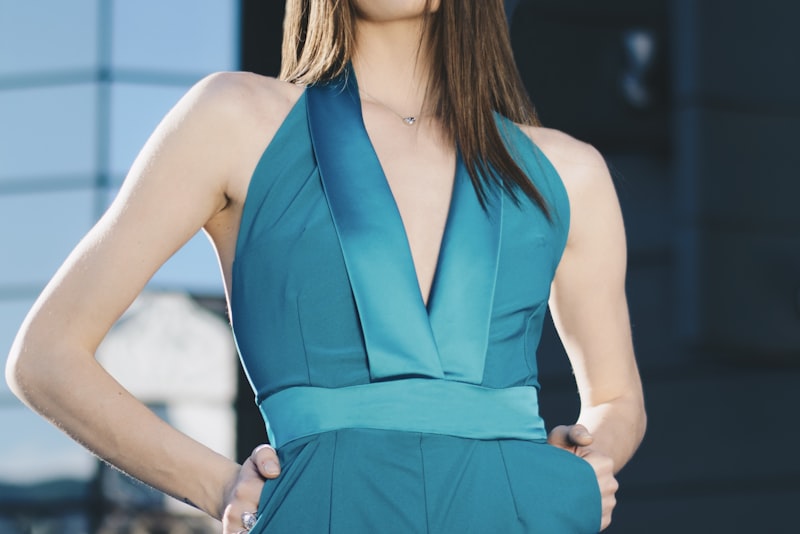
Color is the part of getting dressed that trips people up most, and it's also the part they overthink most. You don't need a color wheel taped inside your closet or a memorized theory of hues. You need a few plain habits that keep an outfit from clashing, plus the confidence to wear the colors you actually love.
The good news is that mixing color well is mostly about restraint and a little intention. Once you understand how neutrals do the heavy lifting and how to let a single color shine, the rest falls into place quickly. This works on every skin tone and every body, because color has no size and belongs to everyone.
Let neutrals do the quiet work#
Neutrals — black, white, gray, navy, beige, brown, olive, cream — are the calm background that makes everything else look considered. They go with almost anything, including each other, which is why an outfit built mostly from neutrals is nearly impossible to get wrong. If color makes you nervous, start here and add from a position of safety.
The trick isn't to wear only neutrals forever, though plenty of stylish people happily do. It's to use them as the foundation so that when you introduce a color, it has room to be seen. A camel coat over a white shirt and dark jeans is a neutral outfit that reads as polished precisely because nothing is fighting for attention. Add one red scarf and suddenly the whole thing has a focal point.
Think of neutrals as the volume control. The more of them you wear, the louder a single color becomes by contrast. That relationship is the single most useful thing to understand about color in clothing, and it costs nothing to apply.
Keep it to two or three colors#
Most outfits look best with two or three colors total, counting your neutrals. Beyond that, the eye doesn't know where to settle, and the look starts to feel busy even when each piece is lovely on its own. A tight palette reads as deliberate; a scattered one reads as accidental.
A simple way to stay in bounds is the two-thirds idea: let roughly two-thirds of the outfit be quiet and one-third carry the color. That might be a bright top with neutral trousers and shoes, or a neutral outfit lifted by colorful shoes and a matching bag. The proportion does the work, so you don't have to.
Getting this balance right is partly about color and partly about how the pieces sit together on the body. If your outfit feels off even when the palette is tidy, the issue may be shape rather than shade — getting proportion right in any outfit covers how the parts relate in size and length, which affects color as much as anything else.
Two easy ways to combine colors#
When you do want more than a single accent, two approaches almost always work:
- Same family: pick colors that sit near each other, like rust, mustard, and olive, or blush, rose, and burgundy. These blend gently and feel harmonious with no effort.
- Clear contrast: pair colors from opposite sides of the spectrum, like blue and orange or purple and yellow, for a bolder statement. Keep one dominant and the other as an accent so the contrast feels chosen, not chaotic.
You don't have to know the names of these schemes to use them. Trust your eye: hold two pieces together in daylight and you'll usually feel immediately whether they hum or jar. That instinct is more reliable than any rule, and it sharpens the more you practice.
Daylight matters more than people realize here. Colors that look coordinated under warm indoor bulbs can read very differently outside, where a navy can turn out to be black or a charcoal reveals a green cast. When you're pairing two pieces you're unsure about, carry them to a window before you commit. It takes a few seconds and saves you from an outfit that looked fine in the closet and slightly off the moment you stepped into the sun.
Use small touches to tie it together#
Accessories are where color coordination gets easy and forgiving. A belt, a scarf, socks, a bag, or shoes can echo a color already in your outfit and make the whole thing feel connected. Repeating a color even once — say, picking up the green of your top in your earrings — signals that the choice was intentional.
You don't have to match colors exactly. Echoing a shade loosely across an outfit reads as more relaxed and modern than matching it perfectly, and it's far easier to pull off.
This is also the lowest-risk way to experiment. If a bold color feels like too much in a whole garment, try it in a small accessory first. A yellow bag is a friendly introduction to a color you might later wear head to toe. Start small, see how it feels, and build from there.
Repetition is the quiet secret that makes an outfit look coordinated on purpose. Picking up the same color in two spots — earrings and shoes, a scarf and socks, a belt and a bag — draws an invisible line across the look that the eye reads as intention. You don't need three items in the color; two is plenty, and often better, because it keeps the effect subtle. Once you start noticing this trick, you'll see it in nearly every outfit that looks effortlessly put-together.
When to throw the rules out#
Every guideline here bends the moment a color simply makes you happy. If a certain shade lifts your mood every time you wear it, that matters more than whether it technically coordinates. Clothes are supposed to feel good, and a color you love will carry an outfit further than a "correct" one you feel nothing about.
Some of the best outfits break the tidy two-or-three-color habit on purpose, layering pattern and brightness with obvious joy. That works because the person wearing it is committed, and commitment reads as confidence. The rules are training wheels — useful while you find your footing, easy to shed once you trust your eye.
Finding your own palette#
Over time you'll notice you gravitate toward a certain family of colors, the ones that suit your coloring and your taste and quietly work together in your closet. That's your palette forming, and it's worth leaning into. A wardrobe built around colors that mix easily means almost anything you own already goes with almost anything else.
Start paying attention to the outfits that make you feel most like yourself and note their colors. If you're assembling looks from scratch, how to build an outfit from what you own pairs neatly with this — pick your anchor, then use these color habits to choose what goes with it. Wear what you love, keep the palette calm around it, and color stops being a hurdle and becomes one of the most enjoyable parts of getting dressed.